
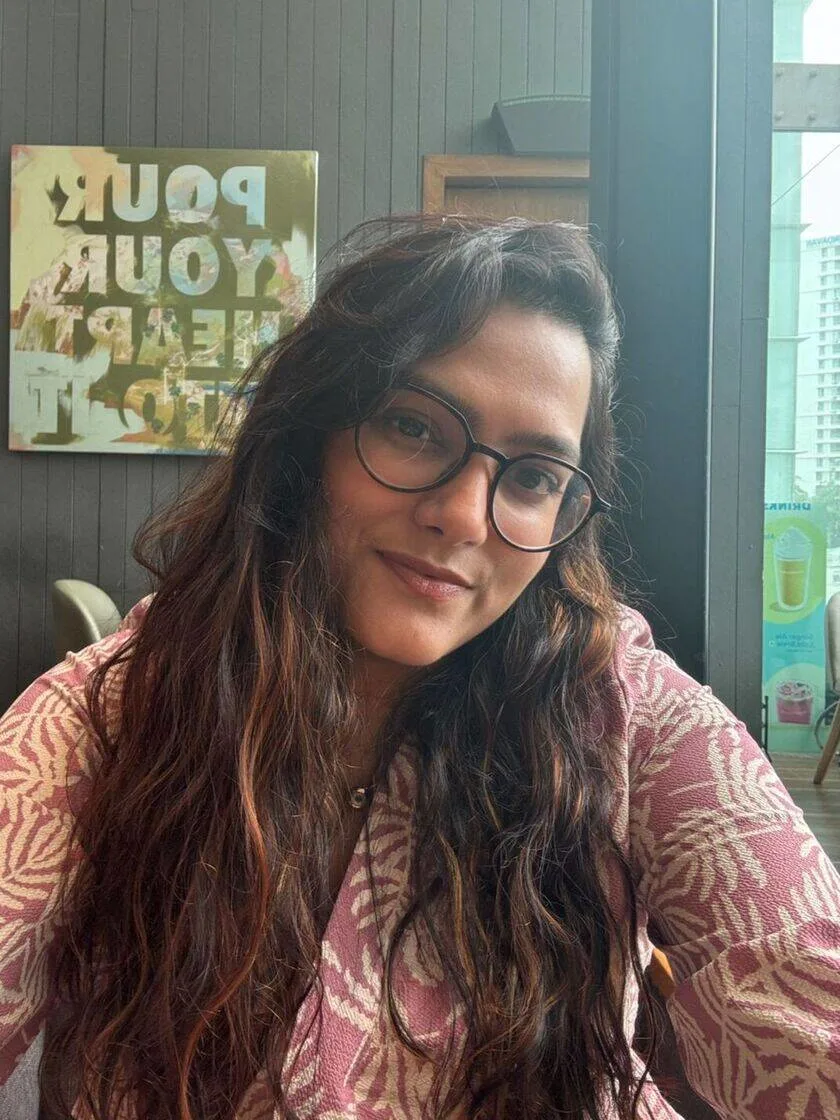
Hansika Korivi
Psychotherapist
- Referred by a therapist
- Clients in 5+ countries
Hi, I’m Hansika. For as long as I can remember, I’ve been the one people turned to, the friend, the daughter, the sister who quietly held space. Caring for others came naturally, but it was only when I found psychology that I realised care could also mean turning inward, meeting myself with more gentleness, and building a steadier relationship with my own emotions.
Life wasn’t a straight path. I worked in advertising, marketing, spent about 5+ years in Dubai and later lived in Liverpool for a short while. Those years abroad shaped me in ways I now see clearly in the therapy room. I understand the reality behind “moving abroad”, the mix of freedom and loneliness, the identity shifts, the pressure to make it work, and the quiet longing for home that can sit underneath an otherwise functional life. This is a big reason I work well with NRI clients and people navigating life between cultures.
My own journey as a client was the turning point. Week after week, I would leave therapy feeling like I knew myself a little more than I did the last time. That unfolding stayed with me. It made me want to keep healing, and also to learn how to hold that kind of space for someone else.
Years of training in Transactional Analysis, and later NLP, gave me both language and tools, but more than that, it taught me how to sit with life’s messiness without trying to rush it into neat answers. In sessions, I aim to be fully present, warm, and deeply curious. Whether you’re bringing burnout, loneliness, relationship stress, joy, or change, I’ll meet you where you are, and stay committed to your care as we make sense of what’s happening beneath the surface.
850+ hours of work in therapy
I have been continuously investing in practical case-based training, client work, and my own personal therapy.
We show therapy sessions so you can better understand a therapist's real-world experience.
Two therapists may both have five years in practice, yet one might have completed 500 sessions while another has completed 3,000. This depends on whether they practice part-time or full-time and how consistently they see clients. Session counts make that difference visible.
Just as you would not trust a surgeon who has only read about the human body but never operated, therapy cannot be mastered through textbooks alone. While many master's programs in India are heavily theory-driven, practical training develops the real skill of therapy - learning how to ask the right question, when to hold silence, when to challenge, and how to respond in complex emotional moments.
Therapists are human, and they carry their own histories. When a client's experiences resemble their own, old patterns can get activated.
For example, if a therapist grew up with a highly critical parent and a client shares a similar experience, that old pattern can get activated. They may unconsciously over-identify, rescue, or react instead of staying objective. Personal therapy helps therapists recognise their own triggers and patterns so they can respond thoughtfully and continue to hold a non-judgemental space. Nobody is born non judgemental, it takes a lot of personal work to get there.

5+ years of in-depth, practical training in psychotherapy
- 5+ years (and ongoing) advanced training in transactional analysis from International Transactional Analysis Association (ITAA)
- Certification in Neuro-Linguistic Programming (NLP) from Anil Thomas Fellowship, Mumbai
- Certified in Counselling Skills from The Berne Institute, United Kingdom
- ITAA DEIA Task Force, India Representative (Asia-Pacific Region)
- Workshop on Autonomy & Homonomy: Individuation and Belonging with Diane Salters & Chitra Ravi
- Inclusive Mental Health Plenary Panel Discussion with Ashwin Naik, Midhun Noble, and Dr. Ketki Ranade
- Working with Couples and Interlocking Racket Systems workshop with Fran Parkins
- Workshop on Exploring the Impact of Advertisements on Mental Health with Dhivya Sundar Rajan
- Working with Stories in Groups - Creative Approaches to Mental Health workshops with Aruna Gopakumar (TSTA), certified trainer from ITAA
✨ Hansika’s training reflects consistent, long-term learning shaped by advanced psychotherapy training and ongoing exposure to international standards and senior as well as international trainers for over 5 years, giving her a strong, thoughtful, and well-grounded therapy foundation.
I’ve been privileged to work with clients ranging from people in corporations to people navigating a work life balance, students and early career individuals across continents.
You are in the right place if you are not primarily seeking relief from sexual disorders or psychosis.

Approaches I Use
- Transactional Analysis (TA)
- Neuro-Linguistic Programming (NLP)
- Gestalt Therapy
- Somatic Approaches
✨ Hansika balances reflective conversation with gentle awareness of bodily and emotional cues during sessions. She is quick to notice shifts in anxiety, openness, and emotional responses, helping you slow down, feel supported, and explore your inner patterns in a way that feels safe and holistic.
What sessions with me feel like
Sessions with me are fluid, alive, and deeply present. I don’t come in with a rigid map, we build the journey together. In the beginning, I’ll spend time understanding you, your larger purpose, the moments you’ve felt most alive, and the times you’ve felt most undone. I listen not just to your words, but to your pauses, your gestures, the way your body shifts when something important stirs.
I like to think of therapy as a co-created space. Some days, that means sitting with what feels unbearable, other days it’s weaving in lightness and humour, because healing isn’t always heavy, sometimes it looks like laughter breaking through the quiet. I’ll ask questions that help you see yourself more clearly, offer reflections, and when it feels right, gently challenge the stories that keep you stuck. By the end of each session, I hope you leave with something to hold onto till we meet next.
Session Basics
Languages
Fluent in English, Hindi &Telugu;
Understands Marathi
Location
Bengaluru, India
Mode
Online only
Duration
60 minutes
Available for
Individual Therapy
Rescheduling/Cancellation Policy
24-hour notice required
Outside therapy
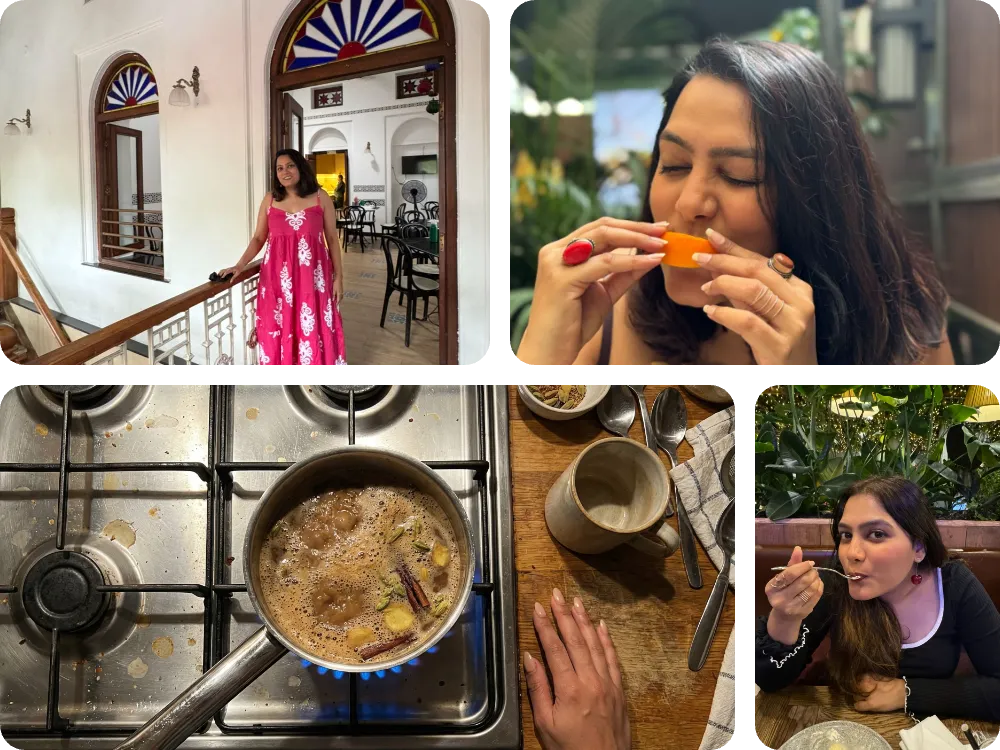
Singing has always been my anchor, what began as quiet humming for my mother grew into leading college bands and remains one of my deepest joys. Though I’m a coffee person at heart, my favourite ritual is making tea for my family, slow and unhurried. And when I’m not singing or brewing chai, you’ll likely find me lost in the pages of literature, where stories keep me company in the gentlest ways.
What clients say
"I had the wonderful experience of attending therapy sessions with Hansika. Without going into a lot of detail, it was a difficult time for me and I was skeptical about therapy processes due to past experiences. However, Hansika has the uncanny ability to really empathize and helped me align my thoughts and feelings that I was struggling to understand. My sessions with her helped me confront and overcome these issues in real, tangible ways that I actually use in my day to day life. It's still an ongoing journey for me but all in all I'm really glad I got in touch with her. In short, she knows her stuff!"
Male, Dubai, 31, Marketing Manager
"As a therapist, Hansika is truly understanding, listens intently and offers ways (her reflections, invitations) to break free from issues that were a constant pattern in my life. She is a very humane person you can relate to powerfully."
Male, United Kingdom, 40, Author and Journalist
"I have been taking therapy sessions from Hansika for 6 months now and she has really helped me find myself back in expressing my needs and handling emotions better in relationships. Working on my emotions has actually kept my anxiety at bay.. I would continue to work with her to tap into some of my inner feelings."
Female, Early 30s, Canada
I've been referred to Mindbun by therapist Haseena Abdulla.
Therapists know what good therapy feels like. That's why this referral is stronger, and why you can trust it.
Frequently Asked Questions
What approaches do you work with?
I primarily work with Transactional Analysis, NLP, Gestalt Therapy, and somatic-informed approaches, integrating structure with experiential self-exploration.
What languages do you offer sessions in?
I offer sessions in English, Hindi, and Telugu. I also understand Marathi.
What type of people may not be the right fit for you?
I may not be the right fit if you are primarily seeking support for sexual disorders or psychosis.
Do you have experience working with clients outside India? Which countries?
Yes. I have worked with clients across multiple countries, including the USA, UK, Canada, Germany, and Australia.
Are your sessions more structured or exploratory?
My sessions are primarily exploratory and collaborative, while gently bringing in structure when clarity or direction is needed.
Will I get exercises or reflection work between sessions?
Sometimes. I may suggest reflections or small practices when helpful, but there is no fixed homework or pressure between sessions.
What if I disagree with you?
I genuinely welcome disagreement in our work together. If something I say doesn't sit right with you, I encourage you to share it openly. Therapy is a collaborative space, and your voice matters deeply here. Often, moments of disagreement lead to powerful insights, about patterns, boundaries, needs, or past experiences. Exploring these moments together can become an important part of your therapeutic growth and help us build a more honest, trusting relationship.
What if it doesn't feel like it's working after a few sessions?
Let's talk about it openly. Therapy is a collaborative process, and it's important that you feel safe sharing if something doesn't feel right. Sometimes, naming what isn't working can lead to meaningful shifts in the work itself. You are always free to pause, take a break, or explore a different therapist if that feels better for you. We can have that conversation together first, or you can also reach out to the Mindbun team for support in finding a better fit. Your comfort and growth matter more than pushing through something silently.