
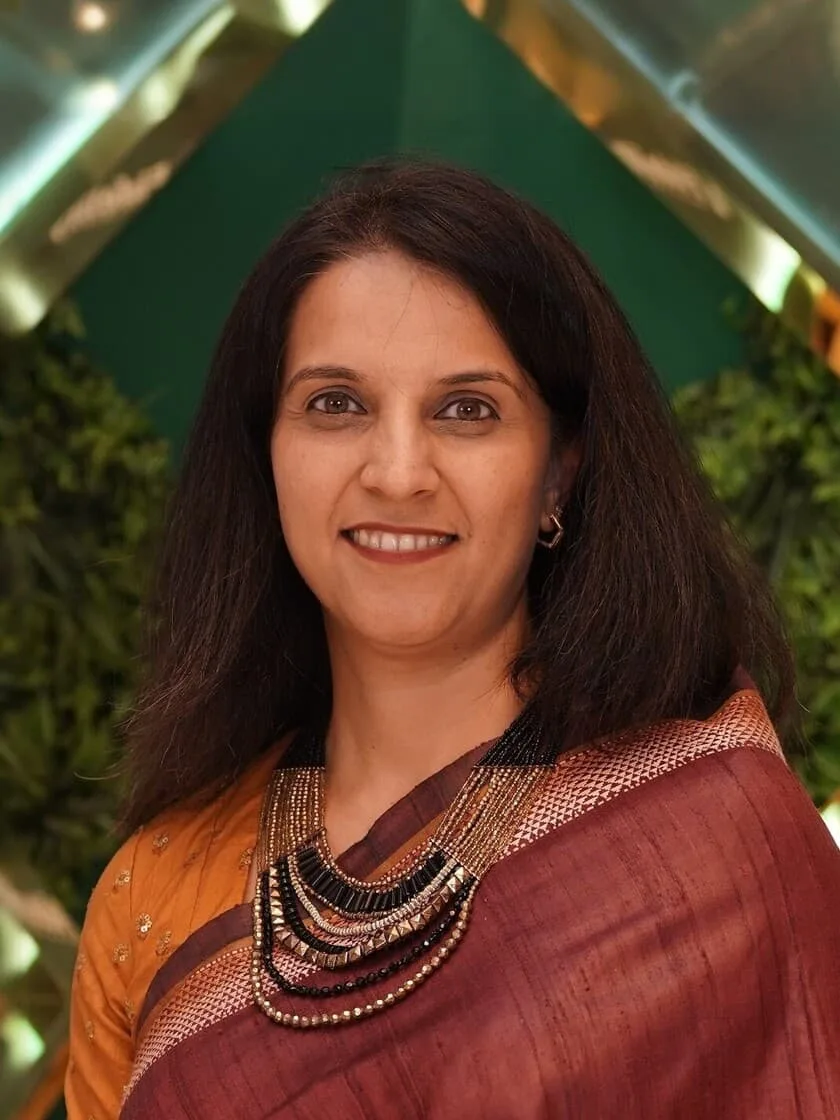
Swati Ramgopal
Psychotherapist
- Referred by a therapist
Hi, I'm Swati! Before stepping fully into psychotherapy, I spent many years in the corporate world, working closely with people, systems, and leadership structures. That experience gave me a deep, lived understanding of ambition, pressure, identity, and the quiet emotional costs that often accompany professional life. Over time, I became increasingly curious about the inner worlds people carried beneath their roles, and that curiosity eventually drew me toward therapeutic work.
Today, my work as a psychotherapist is shaped by this blend of lived corporate experience and psychotherapeutic training. I work primarily with individuals, offering a space that is reflective, relational, and grounded in Transactional Analysis. Together, we look at how early experiences, patterns, and beliefs shape the way you relate to yourself and others today. Rather than rushing to solutions, I focus on helping clients make sense of what’s unfolding, gently uncovering limitations and unhealthy patterns, and understanding them with compassion and clarity.
At the heart of my work is the therapeutic relationship itself. I believe that healing happens in the presence of an authentic, safe connection, one that allows difficult emotions like fear, shame, grief, or sadness to be explored without judgment. I work collaboratively, adapting my approach to what feels most supportive for you, and drawing from multiple frameworks when helpful. Many of my clients come to therapy feeling stuck, overwhelmed, or disconnected from their own sense of power, and my intention is to support them in becoming more autonomous, grounded, and aligned with what truly matters to them.
1260+ hours of work in therapy
I have been continuously investing in practical case-based training, client work, and my own personal therapy.
We show therapy sessions so you can better understand a therapist's real-world experience.
Two therapists may both have five years in practice, yet one might have completed 500 sessions while another has completed 3,000. This depends on whether they practice part-time or full-time and how consistently they see clients. Session counts make that difference visible.
Just as you would not trust a surgeon who has only read about the human body but never operated, therapy cannot be mastered through textbooks alone. While many master's programs in India are heavily theory-driven, practical training develops the real skill of therapy - learning how to ask the right question, when to hold silence, when to challenge, and how to respond in complex emotional moments.
Therapists are human, and they carry their own histories. When a client's experiences resemble their own, old patterns can get activated.
For example, if a therapist grew up with a highly critical parent and a client shares a similar experience, that old pattern can get activated. They may unconsciously over-identify, rescue, or react instead of staying objective. Personal therapy helps therapists recognise their own triggers and patterns so they can respond thoughtfully and continue to hold a non-judgemental space. Nobody is born non judgemental, it takes a lot of personal work to get there.

3+ years of in-depth, practical training in psychotherapy
- 3+ years (and ongoing) of advanced training in Transactional Analysis from International Transactional Analysis Association (ITAA)
- Beyond Words - Psychodrama Workshop conducted by The Psychodrama Circle & Psychodrama Institute of Melbourne
- Multi-Level Learning Workshops organised by SAATA
✨ Swati has trained with the globally recognised body for TA training, and has further developed her work through experiential Psychodrama and continued training with international institutes.
I’ve been privileged to work with clients ranging from corporate professionals to individuals navigating everyday stressors, relationship concerns, and deeper questions of meaning and purpose, covering a wide variety of issues.
You are in the right place if you are not primarily seeking support for neurodevelopmental disorders, psychosis, or active suicidal ideation.

Approaches I Use
- Transactional Analysis (TA)
- Psychodrama
✨ Swati works in an interactive and experiential way, helping clients not just talk about their experiences but actively explore their emotions, patterns, and inner conflicts in session. This makes it easier to gain clarity, process feelings more deeply, and recognise real shifts in thoughts, choices, and relational patterns over time.
What sessions with me feel like
My sessions are reflective and collaborative, offering a balance between structure and openness. We begin by understanding what feels most relevant for you in the present, and gradually explore the patterns, beliefs, and experiences that shape how you relate to yourself and others. I don’t rush the process; instead, we make meaning together at a pace that feels supportive.
At times, our work may involve reflective conversation, and at others, experiential methods that help emotions and insights come alive more clearly. Therapy with me is about building awareness, strengthening autonomy, and creating space for you to step into your own power with clarity and confidence.
Session Basics
Languages
Fluent in English, Hindi, Kannada & Tamil;
Understands Gujarati & Marathi
Location
Bengaluru, India
Mode
Online only
Duration
60 minutes
Available for
Individual Therapy
Rescheduling/Cancellation Policy
24-hour notice required
Outside therapy
I’m an adventurer at heart. I love travelling, discovering new places, cultures, and flavours, and the quiet sense of connection that comes from being in unfamiliar spaces. Closer to home, I cherish meaningful conversations with friends over good food, wine, and music. I’m also a coffee enthusiast who enjoys sitting in cafés with a cup of black coffee, watching the world go by. Inspired by the playful wisdom of Calvin and Hobbes, I find joy in curiosity, humour, and life’s simple pleasures.

What clients say
"Provides clarity on personal thought processes - the way I think. Helps me to understand my personality in a much better way."
Male, Early 30s, Abu Dhabi
I've been referred to Mindbun by therapist Ramya Navin.
Therapists know what good therapy feels like. That's why this referral is stronger, and why you can trust it.
Frequently Asked Questions
What approaches do you work with?
I primarily work with Transactional Analysis (TA), integrating Psychodrama and Two-Chair techniques to support emotional processing and insight.
What languages do you offer sessions in?
I offer sessions in English, Hindi, Kannada, and Tamil. I also understand Gujarati and Marathi.
What type of people may not be the right fit for you?
I may not be the right fit if you are primarily seeking support for neurodevelopmental disorders, psychosis, or active suicidal ideation.
Do you have experience working with clients outside India? Which countries?
Yes. I have worked with clients across multiple countries, including the USA, UAE, and Germany.
Are your sessions more structured or exploratory?
My sessions balance structure with exploration. We maintain direction and continuity while allowing space for reflection and experiential work.
Will I get exercises or reflection work between sessions?
I may suggest reflections or experiential exercises when helpful, but there is no fixed or mandatory homework between sessions.
What if I disagree with you?
I genuinely welcome disagreement in our work together. If something I say doesn't sit right with you, I encourage you to share it openly. Therapy is a collaborative space, and your voice matters deeply here. Often, moments of disagreement lead to powerful insights, about patterns, boundaries, needs, or past experiences. Exploring these moments together can become an important part of your therapeutic growth and help us build a more honest, trusting relationship.
What if it doesn't feel like it's working after a few sessions?
Let's talk about it openly. Therapy is a collaborative process, and it's important that you feel safe sharing if something doesn't feel right. Sometimes, naming what isn't working can lead to meaningful shifts in the work itself. You are always free to pause, take a break, or explore a different therapist if that feels better for you. We can have that conversation together first, or you can also reach out to the Mindbun team for support in finding a better fit. Your comfort and growth matter more than pushing through something silently.