

Samiksha Jain
Psychotherapist
- Referred by a therapist
Hi, I'm Samiksha. I have been practicing for over fifteen years, and what that time has taught me above everything else is that people do not need to be fixed. They need to be accompanied, steadily and without judgment, while they find their own way through.
I did not come to this work through a conventional academic route. My path was longer, more winding, and I think that has made me a better therapist. I have trained across multiple disciplines over the years, building a practice that draws on different ways of understanding a person, their thoughts, their body, their relationships, and the patterns that run quietly beneath all of it. That breadth is not accidental. I believe no single approach reaches every person, and I have never been interested in applying a template.
What has stayed constant through all of it is my intention in the room. I want to be a channel, not a director. I walk alongside the people I work with rather than ahead of them. I hold the space, ask the questions, and trust that the capacity for change already exists in the person sitting across from me. My role is to help them find it and learn to trust it themselves.
I also bring lived experience of navigating fibromyalgia, and I offer emotional support for those living with fibromyalgia and other chronic pain conditions. I know from the inside what it means to carry something that is invisible to others, that does not follow a predictable course, and that asks a great deal of you simply to keep going. That understanding shapes how I hold space for people whose struggles are not always visible or easily named.
Over fifteen years I have sat with people carrying a very wide range of struggles, from the daily weight of stress and strained relationships to deeper questions about identity, resilience, and what kind of life they actually want to build. That breadth of experience means I am rarely surprised, and almost always curious.
6000+ hours of work in therapy
I have been continuously investing in practical case-based training, client work, and my own personal therapy.
We show therapy sessions so you can better understand a therapist's real-world experience.
Two therapists may both have five years in practice, yet one might have completed 500 sessions while another has completed 3,000. This depends on whether they practice part-time or full-time and how consistently they see clients. Session counts make that difference visible.
Just as you would not trust a surgeon who has only read about the human body but never operated, therapy cannot be mastered through textbooks alone. While many master's programs in India are heavily theory-driven, practical training develops the real skill of therapy - learning how to ask the right question, when to hold silence, when to challenge, and how to respond in complex emotional moments.
Therapists are human, and they carry their own histories. When a client's experiences resemble their own, old patterns can get activated.
For example, if a therapist grew up with a highly critical parent and a client shares a similar experience, that old pattern can get activated. They may unconsciously over-identify, rescue, or react instead of staying objective. Personal therapy helps therapists recognise their own triggers and patterns so they can respond thoughtfully and continue to hold a non-judgemental space. Nobody is born non judgemental, it takes a lot of personal work to get there.

15+ years of in-depth, practical training in psychotherapy
- 10+ years (and ongoing) of advanced training in Transactional Analysis (Psychotherapy) from International Transactional Analysis Association (ITAA)
- 3+ years of Foundation training in Transactional Analysis (Counseling) under Anna Chandy, from International Transactional Analysis Association (ITAA)
- 1+ year Foundation in Bodynamics, Bodynamics International
- 1+ year Diploma in Counselling Skills, Banjara Academy
- 1+ year Hypnotherapy, Levels 1 to 4, California Hypnotherapy Institute of India
- Cognitive Behavioural Therapy course, from Pledge Academy and Morphic Minds
- Rational Emotive Behaviour Therapy course, from Morphic Minds
- Couples and Family Counselling, from Parivarthan and The Counselling Academy, UK
- Adolescent Counselling, from Parivarthan
- Anger Management course, from The Counselling Academy
With over fifteen years of continuous training across Transactional Analysis, body-based approaches, couples work, and hypnotherapy under respected Indian and internationally accredited trainers, Samiksha brings both depth and breadth to her practice.
I've been privileged to work with clients ranging from professionals navigating the pressures of demanding careers, to individuals working through relationship patterns and life transitions, to people sitting with deeper questions about who they are and how they want to live, across a wide variety of concerns and life contexts
You are in the right place if you are not primarily seeking support for psychosis or conditions that require immediate psychiatric or medical intervention.

Approaches I Use
- Transactional Analysis (TA)
- Gestalt Therapy
- Cognitive Behavioral Therapy (CBT)
- Rational Emotive Behavior Therapy (REBT)
- Bodynamics
Samiksha works across the thinking mind, the feeling body, and the patterns quietly shaping both, drawing on over years of training across multiple approaches to meet each person at the level where the work is most needed.
What sessions with me feel like
Sessions are shaped around you, where you are in your life, what you are carrying, and what feels most pressing. I do not arrive with a fixed plan. I collaborate with you on what we are working toward and adapt as the work evolves.
I go to the root of things rather than staying at the surface. That means we will not just talk about what is happening but explore where it is coming from, what belief or pattern is quietly running underneath it. I find that reorienting at that deeper level is what creates change that actually holds. Alongside conversation, I bring in somatic work, guided visualization, reflective writing, and creative expression when it feels useful. These are not techniques applied for their own sake. They are ways of reaching what conversation alone sometimes cannot. I follow what each person responds to and build from there.
I hold the space with both warmth and accountability. Feeling safe matters, and so does being genuinely moved forward. Clients who have worked with me over time often describe leaving sessions with a sense of having grown, not just having been heard.
Session Basics
Languages
Fluent in English & Hindi
Location
Bengaluru, India
Mode
Online only
Duration
60 minutes
Available for
Individual Therapy
Rescheduling/Cancellation Policy
48-hour notice required
Outside therapy
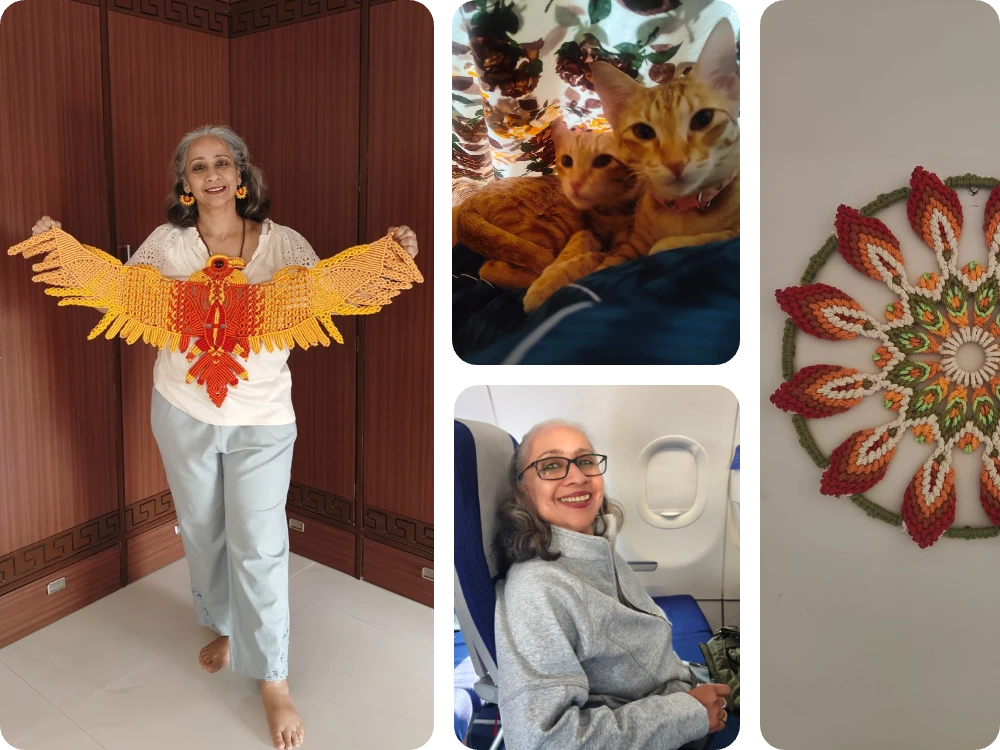
I travel whenever I can, less for the sightseeing and more for what a new place does to how I think. At home I crochet and write, and spend time with my cats. These are the things that quietly restore me between sessions.
What clients say
"I've worked with Samiksha for six years, beginning with grief counseling and evolving into CBT, transactional analysis, grounding, and somatic-integrative work. She tailors each session to my needs, collaborates on clear goals, and maintains a safe, accountable, and respectful therapeutic space. I consistently leave feeling I've grown. I wholeheartedly recommend her."
Female, 30, Bangalore
"I've been working with Samiksha for a year and a half, and her presence has been deeply grounding. She offers a safe space to explore vulnerable memories, emotions, and identity, integrating somatic work, guided visualization, art, and reflective writing. I value her realness, honesty, and responsiveness. With her, I feel seen without judgment, supported in my vulnerability, and consistently guided toward meaningful inner growth."
Female, 35, USA
"Samiksha is the best therapist I have counseled with so far. She goes very deep into the root of the problems and provides positive nudges to the troubled mind. She helps identify the innocence within and re-orient the belief system. I’m still a work in progress, but I have benefitted immensely from her sessions."
Male, Late 30s, Jaipur
I've been referred to Mindbun by therapist Chaitali Shetty.
Therapists know what good therapy feels like. That's why this referral is stronger, and why you can trust it.
Frequently Asked Questions
What approaches do you work with?
I work primarily with Transactional Analysis, Gestalt Therapy, REBT, CBT and Bodynamics, integrating cognitive, emotional, and body-based approaches depending on your needs.
What languages do you offer sessions in?
I offer sessions in English and Hindi.
What type of people may not be the right fit for you?
I may not be the right fit if you are primarily seeking support for psychosis.
Do you have experience working with clients outside India? Which countries?
Yes. I work with NRI clients across countries, including Germany and Nepal.
Are your sessions more structured or exploratory?
My sessions are primarily exploratory and client-led, but I bring in structure and practical tools when clarity or direction is needed.
Will I get exercises or reflection work between sessions?
No. I may suggest reflections or somatic practices, but only if they support your pace and goals rather than overwhelm you.
What if I disagree with you?
I genuinely welcome disagreement in our work together. If something I say doesn't sit right with you, I encourage you to share it openly. Therapy is a collaborative space, and your voice matters deeply here. Often, moments of disagreement lead to powerful insights, about patterns, boundaries, needs, or past experiences. Exploring these moments together can become an important part of your therapeutic growth and help us build a more honest, trusting relationship.
What if it doesn't feel like it's working after a few sessions?
Let's talk about it openly. Therapy is a collaborative process, and it's important that you feel safe sharing if something doesn't feel right. Sometimes, naming what isn't working can lead to meaningful shifts in the work itself. You are always free to pause, take a break, or explore a different therapist if that feels better for you. We can have that conversation together first, or you can also reach out to the Mindbun team for support in finding a better fit. Your comfort and growth matter more than pushing through something silently.